
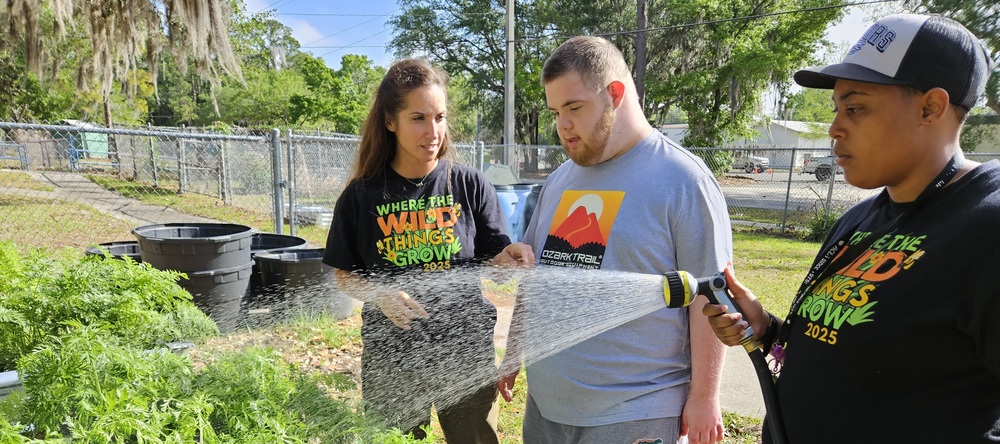
Most weekdays, weather permitting, a group of students can be found tending the garden on the southeast corner of the Sidney Lanier School campus--growing flowers, produce and life skills.
With the guidance and support of teacher Gloria Valladares and other Lanier staff members, as well as some local volunteers, the students in Lanier’s Transition to Life program plant, water, prune and ultimately harvest a wide variety of fruits and vegetables throughout the year.
Many of the fruits (and vegetables) of the students’ labor is prepared and served in the school cafeteria. The students also learn to cook, mix, juice or otherwise prepare the produce for their own use. Some of it goes home to Lanier families and staff, and thanks to the garden’s abundance, some is even shared with the community.
“People will stop by and compliment the students on the garden and we’re able to give them something,” said Valladares.
“I like to harvest,” said 20-year-old Chris Sherrod during a break from gathering ripe strawberries. “It makes me and my teacher feel proud that I grew something in the garden.”
Valladares says both plants and students are blossoming in the garden. Some who are typically non-verbal are expressing themselves more, and students who once sat on the sidelines now actively participate. The garden has also become an effective positive reinforcement tool at Lanier, which serves kindergarten- through 12th grade students with special needs.
“The garden helps them develop not just life skills, but also fine motor skills and just the mental health benefits of being outside in nature and balancing their equilibrium,” said Valladares. “They’re also learning patience. What better way to learn patience than gardening?”
The school has received support from a variety of sources to establish, expand and maintain the garden, including state grant and a recent Whole Foods Kids Garden Grant. Members of the local Master Gardener Program also volunteer regularly, including Mark Zadra.
“Lanier has the best garden of all the schools that I visit,” said Zadra.
Valladares says the support of such partners is critical to the garden’s continued success.
“We wouldn’t be able to do this without them,” she said. “It takes a village, and we’ve been blessed with help from many people.”